
Maltese Grooming: Gentle Care for a Silky White Coat
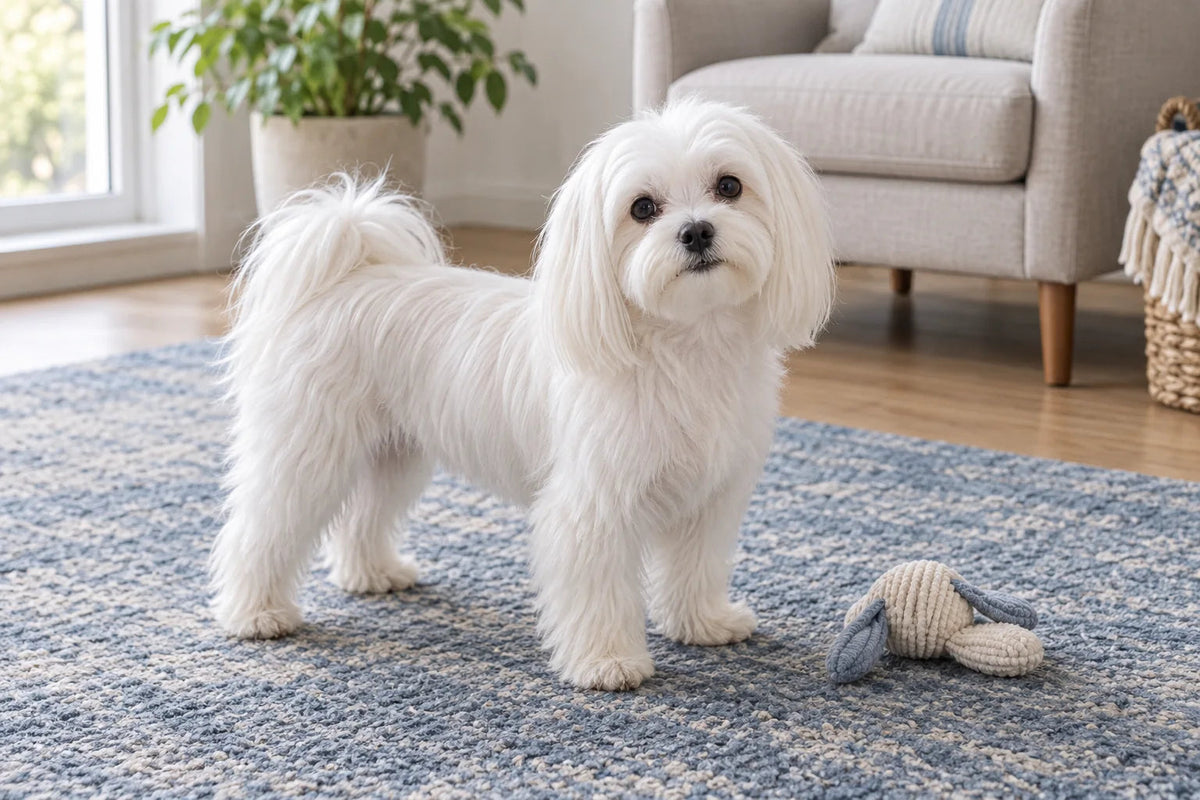
A Maltese’s white hair can look freshly groomed while a small knot is forming behind an ear or beneath a front leg. The colour makes surface dirt obvious; it does not make hidden tangles any easier to see.
You can keep a Maltese in a flowing coat or a shorter pet trim. Either way, the most useful skills are gentle layer brushing, a reliable comb check and knowing when a shorter style would make life more comfortable.
A clean-looking coat is not always a tangle-free coat. Check the roots and friction areas with your fingers and comb. Do not judge readiness for a haircut by colour or surface softness alone.
Silky hair needs a gentle approach
The AKC’s Maltese profile describes the long, silky coat and recommends regular gentle brushing and combing. This is different from maintaining a dense, woolly curl. Scrubbing, rough towel drying and forceful brushing can turn fine flowing hair into a tangle.
Look at the individual dog rather than assuming every white companion dog has the same coat. A Maltese pet trim can retain soft straight hair around the head and legs without the rounded, tightly curled finish associated with a Bichon. Choose tools for the hair you are handling, not just for the dog’s size.
Make small sections your default
Set up on a non-slip surface with a brush, comb and treats within reach. If you use an elevated table, stay beside your dog throughout. Start with an easy area so the first interaction is comfortable.
- Lift a little hair. Work beneath the surface layer instead of brushing the whole side as one sheet.
- Use light strokes. A suitable soft pin brush should separate the hair without repeatedly scraping the same patch of skin.
- Support loose tangles. Hold the hair near its base and ease the ends apart, using a dog detangling product according to its label if helpful.
- Check with a comb. Pass through the section gently. If it catches, investigate the cause rather than pulling harder.
- Finish while the dog is comfortable. Several manageable sessions are better than a prolonged struggle.
Check behind the ears, under the collar or harness, beneath the legs and around the tail separately. Do not put scissors under a close mat. If the hair is felted, tight or uncomfortable to handle, arrange professional help rather than treating it as an ordinary brush-out.
The American Maltese Association’s grooming guidance emphasises regular care, careful brushing and preparation before bathing. The useful lesson for a pet owner is consistency, whether the chosen haircut is long or short.
Keep white facial hair comfortable
Meal residue and water can leave facial hair damp even when the body is clean. Gently wipe ordinary surface dirt with a soft damp cloth, then dry the hair. Avoid repeated rubbing at the same area and do not turn coat care into a quest for perfectly white hair at any cost.
Keep hair from trailing into the eyes or mouth. Ask your groomer to show a safe way to manage retained head hair, or choose a face trim that is easier for you to maintain. Do not attempt precision scissor work beside a moving dog’s eyes. Household bleach, peroxide and improvised stain-removal mixtures do not belong in this routine.
A bath should leave the hair easier to manage
Before bathing, check that the coat can be handled comfortably. Address loose tangles gently; let a groomer assess substantial matting before you proceed. Gather supplies first and use a non-slip bath surface with lukewarm water.
Choose a dog shampoo and follow its label, including any dilution instructions. White hair does not automatically require a whitening product. Work shampoo through without piling the hair into knots, protect the eyes and ears, and rinse carefully underneath the body as well as along the back.
If using a suitable dog conditioner, rinse or leave it in exactly as directed. Blot with a towel rather than rubbing in circles. Dry with comfortable airflow if the dog tolerates it, keeping the dryer moving. Check the roots under the legs and behind the ears: a dry-looking outer layer can disguise damp hair.
For haircut preparation, the coat should be completely dry and gently combable. Our step-by-step coat preparation guide explains how to check this before switching on a clipper.
Choose a pet trim you can maintain
Describe your actual week to the groomer. A dog who enjoys garden play and a household with limited brushing time may be better served by a shorter practical style than long furnishings. Ask what will remain on the legs, ears and face, not just how short the back will be.
Agree on the next appointment according to the retained length and how the coat behaves between visits. If tangles are returning well before the booking, adjust the plan rather than repeatedly trying to preserve a length that is not working.
For routine home checking, the VUNRO coarse-and-fine comb offers two spacings for already loosened hair. Start with the wider teeth. For owners trained in appropriate pet clipping, the VUNRO D-Series clipper can support body trimming with a suitable D-Series blade or compatible attachment. A closer blade is not a shortcut through tangles, and the face and other sensitive areas need experienced handling.
Finish with paws, nails and a useful check-in
Look for ordinary debris around the feet and check nails and any dewclaws regularly. Build calm paw handling before introducing a nail tool. If you are unsure where to stop, have a groomer demonstrate rather than guessing on such small nails.
At the end of the week, ask whether the coat was easy to comb, the face stayed manageable and the dog remained comfortable during care. Those are more useful measures of a successful Maltese grooming routine than maximum hair length or an impossibly white photograph.
Keep learning
More from the Blade Blog
Whippet Grooming: Gentle Coat Care and Comfortable Nails
Read the guide →
Chihuahua Grooming: Smooth Coats, Long Coats and Tiny Paws
Read the guide →